logo logo
giving banner
Donate
    • Membership
    • Donate
  • Social Justice
    • Racial Justice
    • Climate Justice
    • Disability Justice
    • Economic Justice
    • Food Justice
    • Health Justice
    • Immigration
    • LGBTQ+
  • Civic News
  • Nonprofit Leadership
    • Board Governance
    • Equity-Centered Management
    • Finances
    • Fundraising
    • Human Resources
    • Organizational Culture
    • Philanthropy
    • Power Dynamics
    • Strategic Planning
    • Technology
  • Columns
    • Ask Rhea!
    • Ask a Nonprofit Expert
    • Economy Remix
    • Gathering in Support of Democracy
    • Humans of Nonprofits
    • The Impact Algorithm
    • Living the Question
    • Nonprofit Hiring Trends & Tactics
    • Notes from the Frontlines
    • Parables of Earth
    • Re-imagining Philanthropy
    • State of the Movements
    • We Stood Up
    • The Unexpected Value of Volunteers
  • CONTENT TYPES
  • Leading Edge Membership
  • Newsletters
  • Webinars

The Financial Cost of the State Health Exchanges that Failed

Michael Wyland
May 16, 2014

ACA site

May 11, 2014; Politico

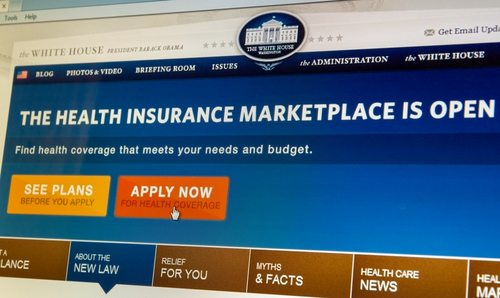
NPQ has previously covered the challenges some states have faced in implementing state insurance exchanges as part of the Affordable Care Act (ACA), also known as Obamacare. Politico’s article mentions technological difficulties plaguing exchanges in Maryland, Oregon, Massachusetts, and Nevada. NPQ has reported on the problems in Oregon and Maryland, as well as the difficulties faced in Hawaii, another state that Politico says could add significantly to the running total. Minnesota’s state exchange is also on Politico’s watch list of potential failures, and others may join in as cost-per-enrollee analyses are publicized. For example, California’s exchange cost per enrollee was below the national average at $758, but the state’s exchange cost more than a billion dollars to set up.

Sign up for our free newsletters

Subscribe to NPQ's newsletters to have our top stories delivered directly to your inbox.

By signing up, you agree to our privacy policy and terms of use, and to receive messages from NPQ and our partners.

The Kaiser Family Foundation estimates that the federal government has authorized just under $4.7 billion in support for states to establish their insurance exchanges. Not surprisingly, reports of programming failures are prompting calls for investigation and accountability.

One effect of states having problems with their insurance exchanges is that more states have shifted from a state-run exchange to reliance on the federal exchange, healthcare.gov, to process insurance applications for their states’ residents. The federal exchange already serves 36 states, according to Politico’s reporting. The problems with the launch of healthcare.gov have been reported upon extensively. The Obama administration reports that approximately 8 million people have signed up through the exchange, but little of the detailed enrollment data (e.g., demographics of those enrolled, how many enrollees have actually paid for and secured insurance, etc.) from the federal exchange is available from most of the state exchanges.

Although the U.S. Supreme Court has sustained the constitutionality of the ACA, there are still legal challenges to key components of the law. One such challenge working its way through the courts is an Oklahoma case challenging the legality of providing insurance subsidies through the federal exchange. Some argue that the language of the ACA made no explicit provision for the federal government to provide such insurance subsidies on its exchange, while others claim that it is lawful because it’s a reasonable consequence of the ACA’s implementation. There is also a suit from employers, Halbig v. Sebelius, challenging the federal exchange’s subsidies and mandates. The IRS won the suit in district court, and the plaintiffs have appealed to the U.S. D.C. Circuit Court of Appeals, a frequent launching point for appeals to the U.S. Supreme Court. With state exchange problems resulting in more Americans relying on the healthcare.gov exchange, the Oklahoma case is increasingly important to the ACA’s promise of access to affordable health insurance options for people in need of subsidies.—Michael Wyland


Our Voices Are Our Power.

Journalism, nonprofits, and multiracial democracy are under attack. At NPQ, we fight back by sharing stories and essential insights from nonprofit leaders and workers—and we pay every contributor.

Can you help us protect nonprofit voices?

Your support keeps truth alive when it matters most.
Every single dollar makes a difference.

Donate now
logo logo logo logo logo
About the author
Michael Wyland

Michael L. Wyland currently serves as an editorial advisory board member and consulting editor to The Nonprofit Quarterly, with more than 400 articles published since 2012. A partner in the consulting firm of Sumption & Wyland, he has more than thirty years of experience in corporate and government public policy, management, and administration.

More about: Disasters and RecoveryHealth EquityNonprofit NewsPolicyTechnology
See comments

You might also like
How MediaJustice Is Leading Communities to Push Back Against AI Data Centers
Myaisha Hayes
If Farm School NYC Closes, What Will the City Lose?
Farm School NYC and Iris M. Crawford
A Practical Guide to Liberatory Leadership: Rooting Our Actions in Our Collective Transformation
Iman Mills Gordon
Digital Transformation, a Nonprofit Primer
James A. Lomastro
Can Nonprofits Restrain Trump’s Autism Agenda?
Matthew Rozsa
Why Nonprofit Control of Information Technology Matters
James A. Lomastro

Upcoming Webinars

Group Created with Sketch.
December 9th, 2:00 pm ET

Nonprofit Safety & Security: Protecting Our People, Data, and Organizations in a Time of Unprecedented Threat

Register
Group Created with Sketch.
January 29th, 2:00 pm ET

Future is Collective

Register

    
You might also like
Protestors and Organizers march in Memphis to protest Big Tech’s rapid data center expansion across the country.
How MediaJustice Is Leading Communities to Push Back Against...
Myaisha Hayes
Participants growing garlic at the Farm School NYC. 2025.
If Farm School NYC Closes, What Will the City Lose?
Farm School NYC and Iris M. Crawford
A colorful bird taking flight, representing liberation and movement.
A Practical Guide to Liberatory Leadership: Rooting Our...
Iman Mills Gordon

Like what you see?

Subscribe to the NPQ newsletter to have our top stories delivered directly to your inbox.

See our newsletters

By signing up, you agree to our privacy policy and terms of use, and to receive messages from NPQ and our partners.

  • About
  • Advertise
  • Careers
  • Contact
  • Copyright
  • Donate
  • Editorial Policy
  • Funders
  • Submissions

We are using cookies to give you the best experience on our website.


Nonprofit Quarterly | Civic News. Empowering Nonprofits. Advancing Justice.
Powered by  GDPR Cookie Compliance
Privacy Overview

This website uses cookies so that we can provide you with the best user experience possible. Cookie information is stored in your browser and performs functions such as recognising you when you return to our website and helping our team to understand which sections of the website you find most interesting and useful.

Strictly Necessary Cookies

Strictly Necessary Cookie should be enabled at all times so that we can save your preferences for cookie settings.