
logo logo
Fund the truth. #Wethecivic giving banner
Donate
    • Membership
    • Donate
  • Social Justice
    • Racial Justice
    • Climate Justice
    • Disability Justice
    • Economic Justice
    • Food Justice
    • Health Justice
    • Immigration
    • LGBTQ+
  • Civic News
  • Nonprofit Leadership
    • Board Governance
    • Equity-Centered Management
    • Finances
    • Fundraising
    • Human Resources
    • Organizational Culture
    • Philanthropy
    • Power Dynamics
    • Strategic Planning
    • Technology
  • Columns
    • Ask Rhea!
    • Ask a Nonprofit Expert
    • Gathering in Support of Democracy
    • Hope in the Dark
    • Humans of Nonprofits
    • Inside the States
    • In Defense of Civil Society
    • The New Harvest Project
    • Notes from the Frontlines
    • Notes from the Long Arc
    • Reimagining Philanthropy
    • The Unexpected Value of Volunteers
    • We Stood Up
  • Newsletters
  • NPQ Online Events
    • Premium Webinars
    • Learn Out Loud
    • Partner Events
    • On Demand
  • Leading Edge Membership

On King’s Birthday, Gov. O’Malley Calls for Md. Death Penalty Repeal

Louis Altman
January 22, 2013

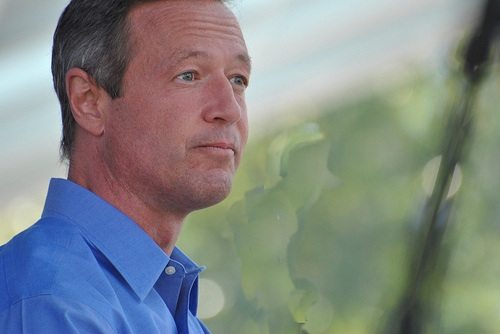
Omalley

January 15, 2013; Source: Wall Street Journal

One week ago today, on Martin Luther King, Jr.’s birthday, Maryland Gov. Martin O’Malley (D) announced that he would introduce a bill calling upon the Maryland legislature to abolish the death penalty in Maryland. O’Malley cited the death penalty’s high cost and ineffectiveness, and noted that its use puts the U.S. in the company of Iran, China, Yemen and North Korea—some of the few remaining bastions of government-sanctioned executions.

O’Malley hopes the time is ripe for change. At a news conference in Annapolis, Md. organized by the NAACP, the governor borrowed a signature King phrase: “Hate multiplies hate. Violence multiplies violence.” In 2009, the governor failed with a similar effort, leading to compromise legislation requiring an increased standard of proof in capital punishment cases such as DNA evidence or video evidence linking a defendant to a killing. Meant to be stringent and fair, many think that effort merely exacerbated racial bias in sentencing, as evidenced by O’Malley’s renewed vigor on the issue and the NAACP’s sponsorship of Tuesday’s event. If the governor’s wish is fulfilled, Maryland will follow five other states that have removed the death penalty in recent years. NPQ noted the repeal of the death penalty in Connecticut last year and Illinois, New Jersey, New Mexico, and New York have also repealed capital punishment since 2007. Thirty-three states maintain capital punishment laws.

Sign up for our free newsletters

Subscribe to NPQ's newsletters to have our top stories delivered directly to your inbox.

By signing up, you agree to our privacy policy and terms of use, and to receive messages from NPQ and our partners.

To some extent, O’Malley’s effort looks akin to putting a cap on an empty bottle. Maryland has only executed five inmates since reinstatement of its death penalty in 1978, and no one has been executed in the state since 2004. The last death sentence in the state was issued in 2005. “If you look over 30 or 40 years, the death penalty was on the books and yet Baltimore still became the most violent and addicted city in America,” O’Malley said. “Having the death penalty on the books did nothing to keep the homicides from rising.” O’Malley also stated, “We know what does not work. And we know that the way forward is always found through greater respect for the human dignity of all.”

Proponents of preserving the state’s capital punishment program are equally passionate, but appear short on statistics. “This governor’s priorities are all messed up,” said Republican House of Delegates member Neil Parrott. “By watering down punishments for violent crime, he’s encouraging crime to happen in Maryland rather than in Virginia or other states,” Parrott pleaded. In the Maryland State Senate, 24 of 47 votes will be required to move the legislation on to the state House of Delegates, where its passage is, reportedly, nearly guaranteed. State Senate President Thomas V. Mike Miller, a Democrat, is pro-death penalty but is said to promise to bring a vote to the full Senate if 24 votes are mustered in favor of repeal. Echoing Parrott, Miller said that he would rather expand the death penalty than eliminate it.

According to a recent Gallup poll, 63 percent of Americans support capital punishment, down from a high of approximately 80 percent in the early 1990s. Is this controversy a moral question or should the death penalty’s ability, or lack thereof, to reduce killing be the only germane issue? And should governments simply follow public opinion on issues of life and death? Where do you stand? –Louis Altman


Our Voices Are Our Power.

Journalism, nonprofits, and multiracial democracy are under attack. At NPQ, we fight back by sharing stories and essential insights from nonprofit leaders and workers—and we pay every contributor.

Can you help us protect nonprofit voices?

Your support keeps truth alive when it matters most.
Every single dollar makes a difference.

Donate now
logo logo logo logo logo
About the author
Louis Altman

Louis Altman is a Vocational Rehabilitation Counselor with the Syracuse, New York office of ACCES-VR, a state agency that works with people with disabilities to help them achieve vocational goals and other related objectives. A licensed attorney in New York for over twenty years, Louis is also an adjunct professor at the State University of New York at Buffalo, teaching Legal & Ethical Issues in Counseling for the University's masters program in Rehabilitation Counseling, a program he graduated from. Louis has been writing newswires for NPQ since 2012. He has a wide variety of interests in the arts, business and sociology, and whatever unique and influential developments NPQ readers might find valuable to know. To leverage his training and experience he is working with NPQ to develop a focus on legal and vocational issues relevant to the nonprofit community.

More about: Nonprofit NewsPolicy
See comments

Sidebar-WTC
You might also like
Thousands of Species Wait for Protection as Delays Grow Under Endangered Species Act
Rajeev Tyagi
Community Benefit Agreements: A Tool for Building Stronger Democracies
Sameera Fazili, Pronita Gupta and Doug Bloch
Custodians
Yahia Lababidi
The New Counterterrorism State
Darakshan Raja
As Surveillance of Immigrant Communities Expands, How Can Nonprofits Respond?
María Constanza Costa
Trump’s Threat to Afterschool Funding—and What’s Emerging to Meet It
Lauren Girardin

Upcoming Webinars

Group Created with Sketch.
June 25, 2:00 pm ET

Reframing Organizational Risk

Register
Group Created with Sketch.
July 16, 2:00 pm ET

Readying for the 2026 Midterms

How 501(c)(3)s Can Educate and Advocate During this Election Season

Register

    
You might also like
Close-up of a red wolf lying still on wood chips, head down, gaze turned away from the camera.
Thousands of Species Wait for Protection as Delays Grow...
Rajeev Tyagi
Community members seated at a public meeting, one attendee holding an open notebook and pen on their lap, ready to take notes.
Community Benefit Agreements: A Tool for Building Stronger...
Sameera Fazili, Pronita Gupta and Doug Bloch
A view of The Tomb of David in 1903, taken on film.
Custodians
Yahia Lababidi

Like what you see?

Subscribe to the NPQ newsletter to have our top stories delivered directly to your inbox.

See our newsletters

By signing up, you agree to our privacy policy and terms of use, and to receive messages from NPQ and our partners.

  • About
  • Advertise
  • Careers
  • Contact
  • Copyright
  • Donate
  • Funders
  • Editorial Policy
  • Media Relations
  • Privacy Policy
  • Submissions

We are using cookies to give you the best experience on our website.


Nonprofit Quarterly | Civic News. Empowering Nonprofits. Advancing Justice.
Powered by  GDPR Cookie Compliance
Privacy Overview

This website uses cookies so that we can provide you with the best user experience possible. Cookie information is stored in your browser and performs functions such as recognising you when you return to our website and helping our team to understand which sections of the website you find most interesting and useful.

Strictly Necessary Cookies

Strictly Necessary Cookie should be enabled at all times so that we can save your preferences for cookie settings.