Editors’ note: On February 20, 2013, the Nonprofit Quarterly and the Alliance for Nonprofit Management hosted an online discussion with Kate Barr of Nonprofits Assistance Fund, Jeanne Bell of CompassPoint Nonprofit Services, Robin Katcher of Management Assistance Group, the author of this article, and, as moderator, NPQ’s Ruth McCambridge. The topic was Nonprofit Capacity Building 2013: What Has Changed? The discussion inspired the author to think about the question as it extends to nonprofit branding, and the ensuing article originally appeared on the website of Creation In Common, on February 22; it was subsequently published on NPQ’s website, on February 25.
So, Nonprofit Branding 2013: What Has Changed? Well. . . everything.
When I read Robert Putnam’s Bowling Alone: The Collapse and Revival of American Community over ten years ago, I saw an opportunity for the nonprofit field to become a central force in rebuilding social capital in communities across the country. Unfortunately, the tools and resources as well as capability to take advantage of this opportunity were not fully in place back then.
First, we needed to see information technology not as a peripheral function within our organization but central to our mission pursuits. Second, we needed to see our identity less as an extension of our mission statement than as a link between the public perception of the impact we create and our higher calling to strengthen communities. Third, we needed to embrace social media fully and completely, as both a technology and a shift in expectations about messaging, engagement, participation, and loyalty.
Over the last ten years, we have addressed many facets of these needs within the field, yet we are no closer to positioning the nonprofit sector as a leading force in building social capital. This brings me to what has significantly changed about nonprofit branding: the ways in which our stakeholders want to participate and ultimately become engaged in our work.
Sign up for our free newsletters
Subscribe to NPQ's newsletters to have our top stories delivered directly to your inbox.
By signing up, you agree to our privacy policy and terms of use, and to receive messages from NPQ and our partners.
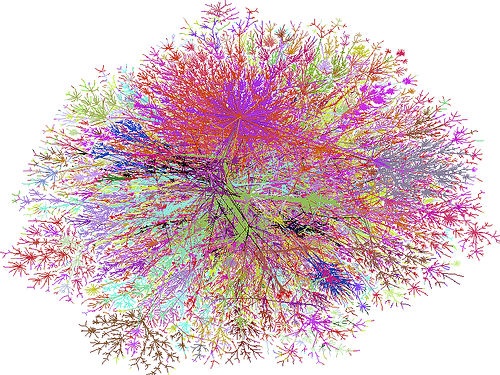
The basic assumption we make about participation is that we can unilaterally dictate the terms of the engagement. Too many of us believe that if we clearly communicate what we are about and do it in a moving and impassioned way, we can incentivize participation. Thus we promote a message that implicitly says: “Our needs first.” What we have overlooked is how potential stakeholders are now largely immune to finely worded messages, pitches, and canned elevator speeches. Stakeholders are building connections that plug them directly into networks they care about, where they can go hands on and be actively engaged. Here the nonprofit crafts council is supplanted by the knitting circle meeting at a local bar or the YWCA competing with a group of seventy-five Facebook friends who organize a weekly workout at a local park (by the way, I belong to this group, have made lots of friends, and lost a bunch of weight).
We have access to the tools and resources needed to build meaningful relationships with our stakeholders; what we lack are the capabilities to do it in a way that advances authenticity and mobilizes the public will. During the online discussion, Robin Katcher spoke of her organization’s work in strengthening “networked leadership” and harnessing the power of “co-creation.” This embraces the fact that real decisions that affect our communities are being made not within an individual nonprofit but out in the networks that stakeholders have forged. This requires us to “co-create” our brands—building a Cause, not just an identity. Here, we leverage the social cohesion needed to take action in order to advance the Cause. Whereas different stakeholders have different motivations, the Cause (when defined) becomes the shared space (a community in its own right) where collective ambitions can be focused and directed.
In order to do this, we need to make a few major systemic changes in how we go about our work. First, we must recognize the potential in our boards to be what Peter Dobkin Hall describes as “boundary-spanners”—making the connection between the needs and will of the community and the organization’s sense of purpose. Second, we need to establish a sustainable dialogue with all our stakeholders about what we are together and how we can create doorways for others to influence the Cause. Third, we need to invest more deeply in our capabilities around “co-creation” and “networked leadership”; we need more creative spaces in which nonprofit leaders (both board and staff) can interact, share ideas, and sharpen skills.
I am afraid we are losing the opportunity to position our field as a primary catalyst for creating greater social capital. We are no longer competing against each other or even for-profit or government interests. We face something more powerful, the full realization of the self-empowered and networked stakeholder—at once an individual, but always an army. We can continue to try yelling our messages at them, or we can stop, pull up a chair, and listen.